Masala haute couture

ARTICLE -

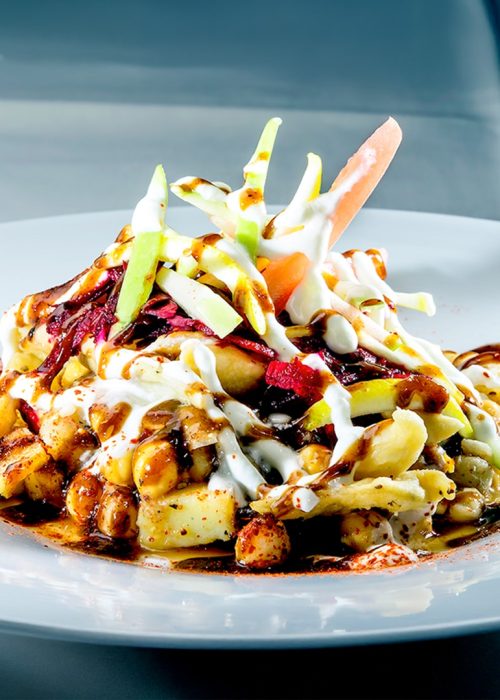
Long reduced to the image of “comfort food,” Indian cuisine has undergone a profound transformation. In New York as in London, it now asserts itself as a sophisticated, regional gastronomy firmly rooted in fine dining.

Benares 1
indian accent 1

For Harmandeep Hundal, Wine Director at the restaurant Azitra in New York, the shift is clear: Indian cuisine “has moved far beyond that initial perception. It is now recognized as a sophisticated, diverse and deeply regional cuisine.” The same observation is shared at Indian Accent: diners are now seeking “authentic cuisine that goes beyond the clichés they were once accustomed to,” says Chef Raveesh Kapoor.

These clichés have long been surpassed in London, where Indian cuisine has historically been part of the gastronomic landscape. “We have guests who know India very well and understand the distinct identities of its regional cuisines,” observes Sameer Taneja, Chef of the Michelin-starred restaurant Benares in Mayfair. For him, the natural approach is to offer

“a creative interpretation of deeply rooted Indian cuisine, combining local sourcing with authentic products from the diverse terroirs of India.” The Indian gastronomic scene is no longer adapting. It is asserting itself.

indian accent 2

Aromatic Architecture

The first misunderstanding concerns spices. “India is not only a land of spices; it is a land of flavours,” reminds Raveesh Kapoor. The goal is not heat, but construction. Spices “are not about spiciness, but about balance and depth.”

They are carefully selected and blended to enhance a dish, never to overpower it. They must act as a “catalyst for flavours,” insists Sameer Taneja, noting that spices are no longer the preserve of Indian cuisine alone, citing French chefs such as Olivier Rollinger as great users of spices.

At Azitra, the emphasis is on harmony, where each spice has its own voice. Layering, tension, softness, roasting: the sophistication lies in the aromatic architecture. This precision profoundly changes the question of food and wine pairings.

indian accent

Wine as a Partner

The second misunderstanding concerns the pairing itself between Indian cuisine and wine.

“Many of my guests are unaware of the remarkable connection between wine and Indian cuisine,” observes Grony Dias, Head Sommelier at Benares in London.

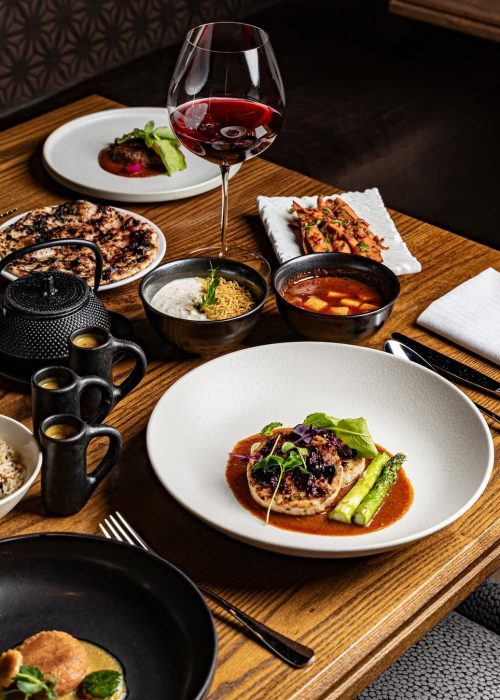
“Balance and structure are essential,” explains Harmandeep Hundal. Wines with expressive aromas, supple tannins and a freshness capable of cutting through the richness of ghee and sauces naturally find their place at the table.

Raveesh Kapoor adds that acidity refreshes the palate, while well-managed tannins prevent amplifying the sensation of heat. Yet beyond technical parameters, it is aromatic resonance that creates the most compelling pairings.

In this regard, Grony Dias highlights the strengths of the great wines of Bordeaux: “their balance, structure and delicate fruit complement our cuisine perfectly without ever overwhelming it. With roasted or grilled dishes, Bordeaux reds work beautifully; with richer dishes and sauces, Bordeaux whites create excellent pairings.”

Azitra 1

Cos d’Estournel, a Natural Resonance

While Grony Dias recalls the “deep connection between Cos d’Estournel and India,” as well as the title of “Maharajah of Saint-Estèphe” once given to Louis-Gaspard d’Estournel, the connection emerges just as naturally at the table.

Cos d’Estournel develops notes of black pepper, clove, cinnamon and sweet spices. These aromas lie at the very heart of Indian masalas.

“With so many aromatic similarities, the pairing becomes obvious,” notes Raveesh Kapoor. It is not about confrontation, but continuity.

Harmandeep Hundal evokes the elegance and complexity of Cos d’Estournel, capable of creating “harmony rather than competition” with the depth of the dishes. The tannins converse with the texture of tandoori meats; freshness supports the sauces; length extends the aromatic persistence.

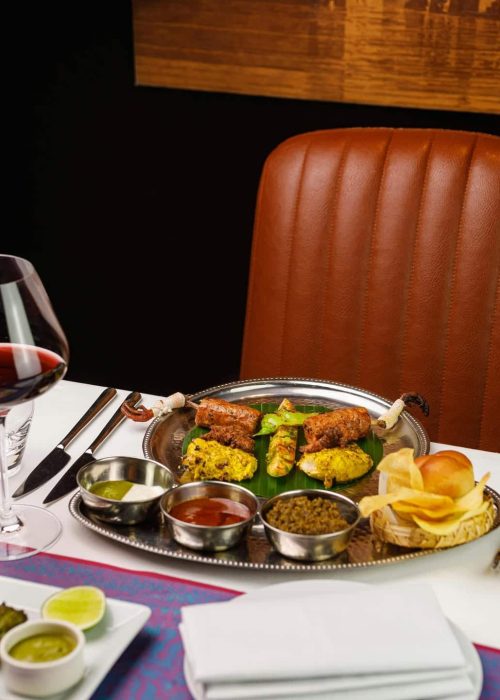
Garlic-marinated lamb fillet, tandoori chops with spiced vegetables, dishes marked by the smoky imprint of the tandoor… richness calls for structure; gentle spices echo the wine’s nuances.

In this evolution, wine plays a structuring role. It elevates the experience and anchors Indian cuisine within the global gastronomic dialogue.

Pairing this cuisine with Cos d’Estournel—whose history is linked to India through the “Retour des Indes” expeditions—naturally extends this bridge between East and West.

“Cuisine and wine are about dialogue and discovery,” concludes Harmandeep Hundal.

Today, Indian haute cuisine no longer seeks to adapt. It affirms its complexity—and finds in Cos d’Estournel a partner worthy of it.


are you of legal drinking age in your country of residence ?

You must be of legal drinking age in the country from where you are accessing this site

Alcohol abuse is bad for your health, please consume in moderation